

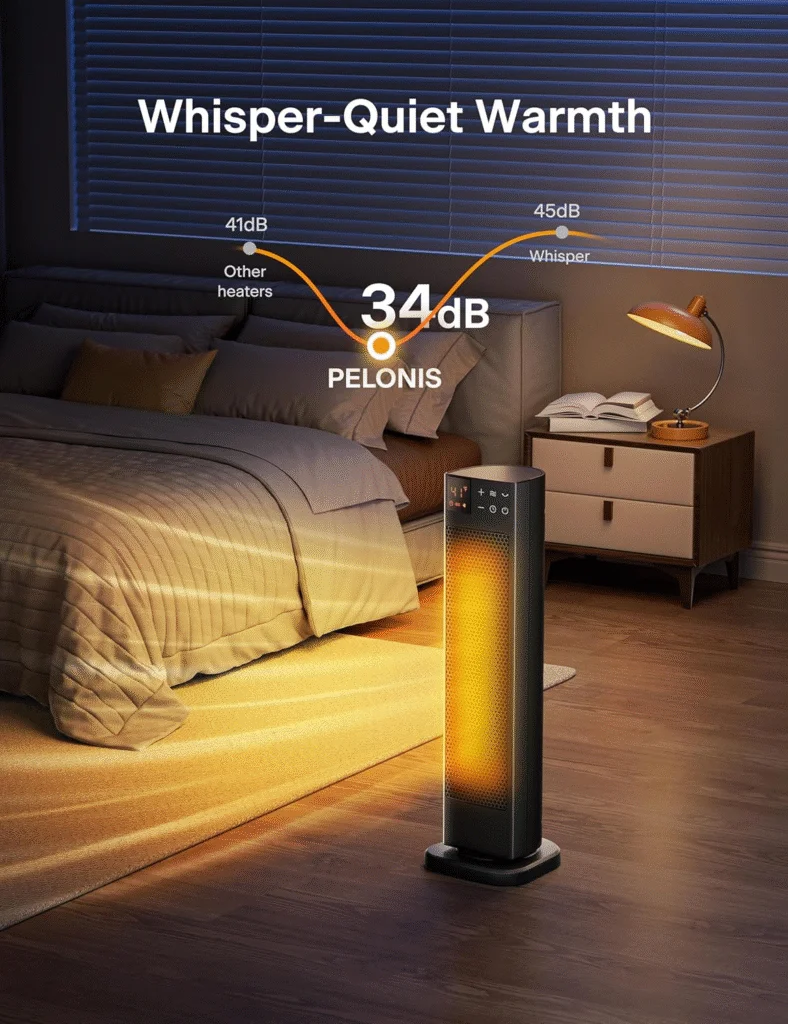
A compact tower heater is one of the simplest ways to make a bedroom or home office more comfortable in cold weather, especially if you don’t want to heat an entire home. The PELONIS oscillating ceramic tower heater (model PHF15RSAPH23) is built for that job: fast warm air, easy controls, and features aimed at keeping a steady temperature without constant adjustments.
This article explains what the heater is designed to do, who it’s best for, and what to check before buying. It avoids fixed price claims, limited-time deal language, and copying customer reviews or star ratings, which helps keep the content safe for affiliate use.
What it is (and what it isn’t)
The PELONIS PHF15RSAPH23 is an indoor electric ceramic tower space heater in the common 1500-watt class. That wattage level is popular because it can warm a typical room area efficiently when used as “spot heat” (heating the space you’re actually using) rather than trying to replace whole-house heating.
The tower shape is practical in small spaces. Instead of a wide heater that takes up floor area, a slim vertical heater can sit near a desk, beside a bed, or in a corner of a living room while still delivering airflow at a comfortable height.
It’s not meant for outdoor use, and it’s not a permanent heating system. Think of it as a flexible tool for comfort—move it where you need it, use it when you need it, and store it when the weather changes.
Features that matter in real life
1) Ceramic heating for quick warmth
Ceramic fan heaters are chosen because they usually feel responsive. You turn the unit on and get warm airflow quickly, which is ideal when you’re starting your day in a cold room or trying to take the chill off before bed.
2) Oscillation to spread heat
Oscillation is more than a “nice extra.” When the heater sweeps left and right, it can distribute warm air across a wider part of the room. That helps if you’re not sitting in one fixed spot, or if you want the room to feel more evenly warmed instead of having one hot zone in front of the unit.
3) Remote control + touch controls
Remote control is a big quality-of-life feature. It lets you adjust settings from the couch or bed without walking over to the heater. Touch controls on the unit are still useful for quick changes, especially if the remote isn’t nearby.
4) Thermostat and ECO-style mode
A thermostat-based heater aims to maintain a target temperature rather than running at full power nonstop. That can make the room feel more stable and can reduce unnecessary cycling. An ECO mode typically tries to balance comfort and energy use by adjusting output to maintain a steady room temperature.
5) Timer for routine use
A timer can be helpful for sleep or work routines. For example, you can run the heater for a set period while you fall asleep or while you focus at your desk, then have it shut off automatically later. If a timer is important for your lifestyle, confirm the exact timer range for the specific unit version you’re buying.
Safety: what to expect and how to use it wisely
Space heaters should always be treated with care. Many modern tower heaters include safety features such as tip-over protection (the heater shuts off if it gets knocked over) and overheat protection (the unit shuts down if it reaches unsafe internal temperatures). These protections are valuable, but they do not replace safe habits.
For safer use, place the heater on a stable, flat surface and keep it away from curtains, bedding, and anything that can melt or ignite. Avoid placing it where it can be bumped easily by kids or pets. Also, plug the heater directly into a wall outlet rather than relying on extension cords, which can overheat if they aren’t rated for high-draw appliances.
If you use a heater daily, it’s also smart to keep the intake and outlet areas clear of dust buildup, because airflow restrictions can affect performance and safety over time.
Everyday performance: what you’ll notice
A tower heater like this is often chosen for comfort plus convenience. In day-to-day life, the biggest wins tend to be:
- How quickly the room feels warmer after switching it on.
- How evenly the warmth spreads when oscillation is enabled.
- How easy it is to adjust settings with a remote rather than getting up.
Noise is another practical factor. Most fan-based space heaters produce some sound due to airflow. For many people, the noise is acceptable for a bedroom or office, but sensitivity varies. If you work in a quiet environment or you’re a light sleeper, expect some fan noise, especially at higher settings.
Portability is a final advantage. A tower heater is typically easy to move from room to room, which matters if you want warmth in your office during the day and your bedroom at night.
Who should consider this heater?
This PELONIS tower heater is a good fit if you:
- Want targeted warmth in a single room.
- Prefer a slim heater that’s easy to place.
- Value convenience features like a remote, timer, oscillation, and thermostat control.
You may want a different option if you:
- Need to heat a very large, drafty space.
- Want silent heat (in that case, some radiant options may be quieter, though usually slower).
- Plan to use a heater in spaces where airflow must be extremely quiet or where a tower unit isn’t stable.
What to check before buying (quick checklist)
- Power requirements: A 1500W heater draws significant power, so consider what else is on the same circuit.
- Room size and insulation: Better insulation means better results.
- Placement: Make sure you have safe clearance around the heater.
- Control preferences: Remote, thermostat control, ECO mode, and timer can make daily use smoother.